 Organic
 Halal
Halal Kosher
 Elemental Ingredients
 Free Shipping Over $30
Skincare Research
Goat Milk Soap Benefits for Skin: What Does the Research Say?
A plain-English look at goat milk, lactic acid, milk lipids, lactoferrin, and what finished soap research still needs to prove.
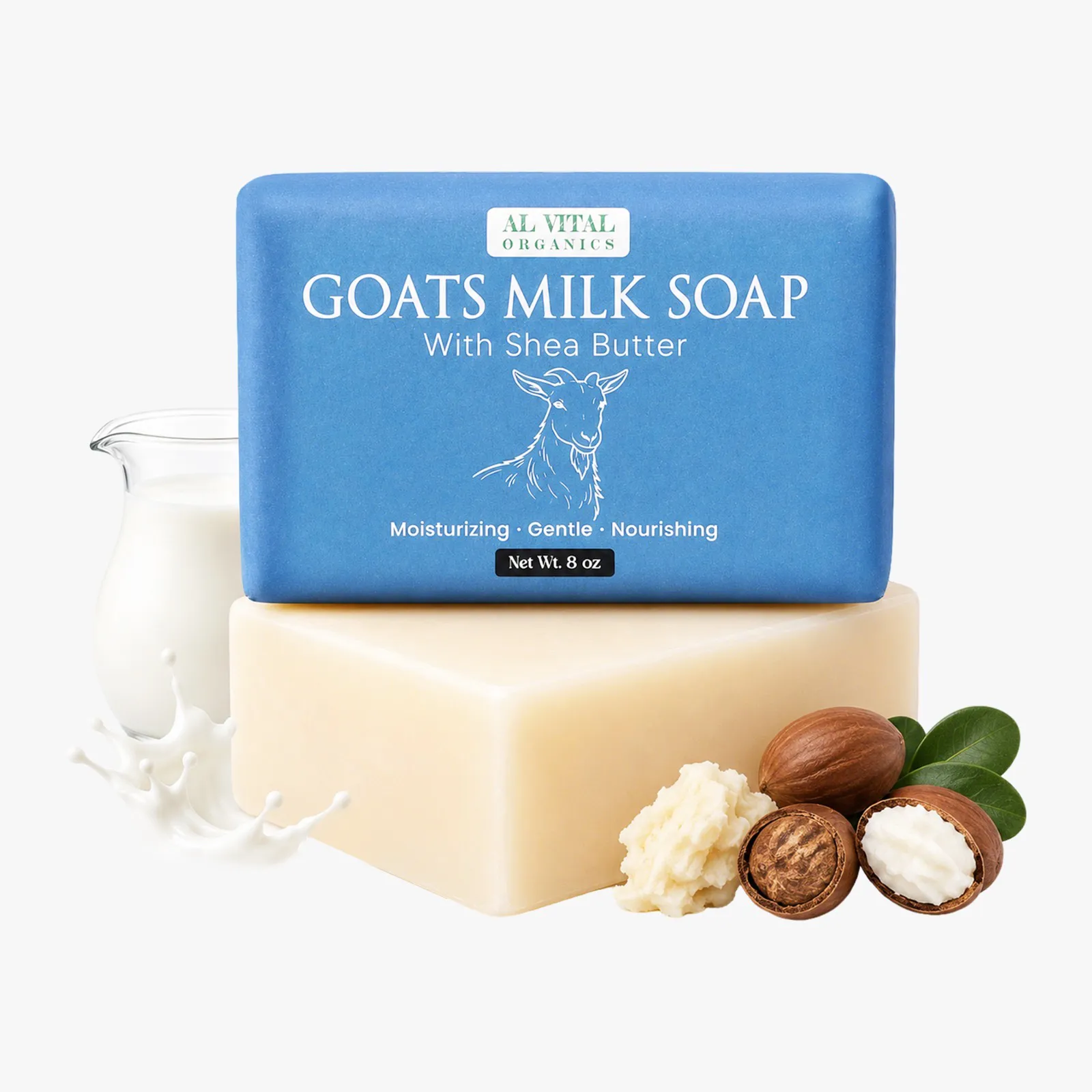
Goat milk contains naturally occurring lipids, fatty acids, lactic acid, proteins, peptides, and compounds such as lactoferrin that are of interest in skincare research. These components help explain why goat milk soap is popular for dry or sensitive-feeling skin, but the evidence does not prove that finished goat milk soap treats eczema, acne, psoriasis, or any medical skin condition.
The strongest evidence is for goat milk components and related cosmetic science, not disease-treatment claims for finished soap.
Quick Takeaways
Goat milk is interesting for skincare because it contains lipids, fatty acids, lactic acid, proteins, peptides, and antioxidant-associated compounds.
A goat milk soap may feel creamy or less stripping when the full formula is gentle and well balanced, but the finished soap recipe matters more than goat milk alone.
Research on goat milk components should not be translated into disease-treatment claims for eczema, psoriasis, acne, or other skin conditions.
Key Findings
Goat milk contains medium-chain fatty acids and triglycerides that are relevant to emollience and skin-barrier comfort.
Goat milk naturally contains lactic acid, but a rinse-off soap should not be treated like a dedicated lactic-acid exfoliating product.
Milk proteins such as lactoferrin are biologically active, but finished goat milk soap needs product-specific testing before stronger claims can be made.
What Is Goat Milk Soap?
Goat milk soap is usually made by combining goat milk with fats or oils and an alkali through saponification. Depending on the maker, the finished bar may also include ingredients such as olive oil, coconut oil, shea butter, glycerin, botanical oils, fragrance, or essential oils.
That final formulation matters a lot. Two bars labeled goat milk soap can feel very different depending on the amount of goat milk, the fats used, the fragrance system, the cleansing strength, and the way the bar is cured.
Why Goat Milk Is Interesting for Skin
A 2025 narrative review in the International Journal of Molecular Sciences examined goat milk's medicinal and cosmetic properties, including bioactive proteins, peptides, fatty acids, and other components connected with skin-health research.
The review describes goat milk as a source of medium-chain fatty acids and triglycerides. These lipids are relevant because the outer skin barrier depends on lipids to help reduce excessive water loss and maintain a comfortable feel.
This helps explain why many people search for goat milk soap for dry skin. A well-formulated cleansing bar that includes fats and emollient ingredients may leave skin feeling less tight after washing than a harsh cleanser. Still, the final effect depends on the complete soap recipe, not goat milk alone.
Lactic Acid: Helpful Context, Not an AHA Peel
Goat milk naturally contains lactic acid, an alpha-hydroxy acid used in many cosmetic and dermatology products. Dedicated lactic-acid formulas have been studied for smoother-feeling skin, hydration, and the appearance of roughness when used at specific concentrations and under specific formulation conditions.
That does not mean goat milk soap should be treated like a professional acid exfoliant. A rinse-off soap has different concentration, pH, contact time, and formulation behavior from a leave-on lactic-acid cream or lotion.
The careful way to say it is this: naturally occurring lactic acid is one reason goat milk attracts skincare interest, but finished goat milk soap should not be marketed as an AHA peel.
Lactoferrin, Proteins, and Bioactive Peptides
Goat milk also contains proteins and peptides that researchers are studying for biological activity. The 2025 review discusses lactoferrin, lysozyme, beta-casein, and alpha-lactalbumin in connection with antimicrobial activity, immune signaling, inflammation pathways, skin-barrier biology, and tissue-repair research.
Lactoferrin is an iron-binding protein naturally present in mammalian milk and other secretions. Dermatology-adjacent research continues to investigate lactoferrin and related peptides for antimicrobial and tissue-repair activity, although much of that evidence is still preclinical or formulation-specific.
These findings are interesting, but they should not be stretched. Evidence about lactoferrin as a biological compound does not automatically prove that every goat milk soap delivers clinically meaningful lactoferrin activity.
Dry Skin and Sensitive Skin: What the Evidence Supports
Goat milk soap is often chosen by people who dislike the tight, stripped feeling some cleansers can leave behind. Goat milk contains fats, and formulas that include moisturizing oils, shea butter, or glycerin can produce a creamier, more cushioned cleanse.
For dry-feeling skin, the most reasonable claim is that goat milk contains lipids and other compounds relevant to skin comfort, and that a gentle goat milk soap may provide a different cleansing feel from harsher formulas.
Sensitive skin is more individual. A simple goat milk soap without unnecessary fragrance or irritating additives may be preferable for some people, but natural does not automatically mean non-irritating. People can react to fragrance, essential oils, botanical extracts, preservatives, individual soap ingredients, or milk proteins.
Eczema, Psoriasis, and Acne Claims Need Extra Care
Goat milk soap is often discussed online alongside eczema, psoriasis, and acne, but this is where language needs to stay especially precise.
The 2025 review discusses goat milk compounds and molecular pathways that may be relevant to inflammatory skin research. That does not establish goat milk soap as a treatment for inflammatory skin conditions.
A published case report described goat-milk allergy developing in members of a household with atopic dermatitis after repeated exposure to goat-milk soap. The authors cautioned that food-protein-containing skincare products may be risky for people with compromised skin barriers.
For acne, goat milk's lactic acid and lactoferrin are scientifically interesting, but ordinary rinse-off soap is not the same as an acne medication. Persistent acne, eczema, psoriasis, or allergic reactions should be discussed with an appropriate healthcare professional.
What the Science Currently Supports
The strongest evidence supports describing goat milk as a nutrient- and lipid-containing cosmetic ingredient with biologically active components worthy of additional dermatological research.
Current research identifies fatty acids and triglycerides relevant to emollience, naturally occurring lactic acid, proteins such as lactoferrin and lysozyme, peptides under investigation for skin applications, antioxidant-associated compounds, and components involved in immune and inflammatory pathways.
The evidence becomes weaker when these ingredient-level findings are translated into claims that finished goat milk soap treats specific medical conditions. More controlled human trials specifically studying goat milk soap are needed.
Frequently Asked Questions
What are the main benefits of goat milk soap?
Goat milk contains naturally occurring fats, fatty acids, proteins, lactic acid, and other bioactive compounds that are of interest in skincare research. Depending on the complete formulation, goat milk soap may provide gentle cleansing and leave the skin feeling soft.
Is goat milk soap good for dry skin?
Goat milk contains lipids and fatty acids relevant to skin moisturization. A properly formulated goat milk soap may be suitable for people looking for a cleanser that does not leave their skin feeling excessively dry.
Does goat milk soap exfoliate?
Goat milk's naturally occurring lactic acid provides a theoretical basis for mild exfoliating interest, but actual exfoliating activity depends on concentration, pH, formulation, and contact time.
Can I use goat milk soap every day?
A mild goat milk soap may be used as a daily cleanser if it is well tolerated. Stop use if the product causes persistent dryness, itching, redness, burning, swelling, or irritation.
Bottom Line
Goat milk is a compelling cosmetic ingredient because it contains lipids, lactic acid, proteins, peptides, and antioxidant-associated compounds that researchers continue to study. For everyday skincare, the most grounded takeaway is simple: goat milk soap may offer a creamy, gentle cleansing experience when the whole formula is well designed.
At the same time, finished goat milk soap should not be presented as a treatment for eczema, psoriasis, acne, infections, allergies, or other medical concerns. The science is interesting, but the best claims stay measured.
What This Research Does Not Prove
This research does not prove that goat milk soap treats or prevents eczema, psoriasis, acne, infections, aging, or any medical skin condition. It also does not prove that every goat milk soap contains the same amount of goat milk, lactic acid, lipids, lactoferrin, or bioactive peptides after processing.
Study Source
Genomic Tools for Medicinal Properties of Goat Milk for Cosmetic and Health Benefits: A Narrative Review
- Authors
- Keabetswe T. Ncube, Mamokoma C. Modiba, Takalani J. Mpofu, Khathutshelo A. Nephawe, Bohani Mtileni
- Year
- 2025
- Journal
- International Journal of Molecular Sciences
- Study Type
- Narrative review of goat milk bioactive compounds, genetic factors, and potential cosmetic and skin-health applications.
- DOI
- 10.3390/ijms26030893
- Limitation
- The review discusses goat milk compounds and biological pathways; it does not prove that every finished goat milk soap produces the same effects on human skin.
Safety Notes
For external use only. People with a known allergy to goat milk or related milk proteins should avoid goat-milk-containing skincare products. People with eczema, severely compromised skin barriers, or a history of allergic reactions should be cautious with food-protein-containing skincare products and ask a qualified healthcare professional before use. Discontinue use if irritation, itching, redness, burning, swelling, or hives occur.